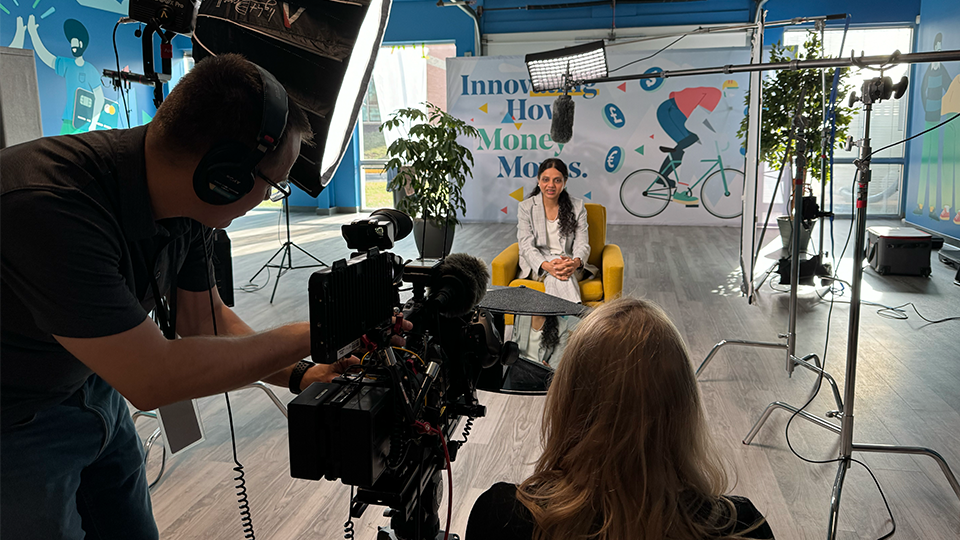
In B2B tech, trust is currency. Generic case studies rarely move the needle, but well-chosen customer story videos can build credibility quickly and bring your value proposition to life in a way slide decks never can.
In our webinar, Driving B2B revenue with customer story videos, we share what we’ve learned from helping global tech brands turn their happiest customers into credible, on-camera advocates.
You’ll see how we help technology clients turn real customer relationships into video content that sales teams actually use. For one client alone, this approach has already influenced more than £3 million in revenue while cutting cost per engagement by half.
Simon Crofts, Client Services Director, shares the key takeaways:
-
Why customer advocacy video works
Customer stories outperform most other B2B marketing because people trust peers more than brands. Think of it as “AI resistant”content: credibility comes from real humans speaking authentically rather than polished brand claims or avatars.
-
Start with objectives or you’re guessing
Set objectives before you build anything, otherwise you won’t know how many films you need, where they sit in the funnel, or what “good” looks like. In practice, objectives can range from views and clicks through to pipeline influence and revenue, but the point is to choose them upfront.
-
Build a repeatable framework, not one-off hero projects
The strongest programmes have a consistent approach across pre-production, production, post, distribution, and measurement. Consistency matters in two ways: it protects brand consistency and quality across every story, and it creates a consistently good experience for customers on the day. It’s also important to consider how your customers will react if their story isn’t to the same standard as others.
-
Internal buy-in is the multiplier
The content has to be used across the business, not just posted and forgotten. That’s why sales enablement is called out as critical, with edits and formats that match how sales actually sells, including pitch use, follow-up clips, email links, and so on.
-
Pick customers for brand pull or story pull, ideally both
The best case is a recognisable brand with a genuinely compelling story. If you do not have both, you can still win, but you need to choose one of the two deliberately.
-
Casting matters more than job titles
The most effective films feature people who are engaging on camera and genuinely passionate, not just the “right” seniority. It also helps to segment by audience, because decision makers and day-to-day users care about different things, so do not try to make one film do every job.
-
Authentic beats scripted
Scripted customer advocacy undermines trust. Instead, you need conversational interviewing, strong direction, and a tight edit. Also, don’t assume the account owner or marketer should interview – it’s a specialist skill.
-
Story first, stats second
Stats belong in the film only if the customer is comfortable and prepped. If you ask for numbers on the day you’ll get awkwardness, hedging, or silence, so build a written story first where needed, get sign off early, then film with confidence.
-
Plan distribution before you shoot
Decide aspect ratios, runtimes, channels, captions, and languages up front. That way you can maximise a shoot day by planning a hero film plus breakouts and short edits for different audiences and use cases. If you’re building a global programme, plan localisation early so the content resonates in different markets and stakeholder groups without reinventing the wheel each time.
-
Measurement and proof
Views is the standard metric, but it’s not always the right one. Instead, consider leads, bookings and revenue influenced as the gold standard. Don’t overlook the “soft” values that still matter: stronger customer relationships, deeper conversations than a typical meeting allows, and customers who feel valued and looked after.
-
Getting customer approval is part of the job
Start early, involve stakeholders early, and arm your champion with standard answers on risk, IP, approvals, insurance. Sweeteners that help include sharing rushes for their own use, or giving them a cutdown edit that supports their goals, such as recruitment, launch, or internal comms.
-
Involve your agency early in the process
Finally, involve your agency right at the front end, including early kick-off calls with customers, so everyone is clear on what you’re trying to achieve. This also helps you manage expectations and make the customer feel comfortable with what the process will look like and the people involved.
What this means for B2B teams building customer advocacy
This webinar offers a few practical takeaways:
- If you want customer stories to influence revenue, start with objectives, then design the programme around them.
- If you want consistency and scale, build a repeatable framework rather than treating each film as a fresh project.
- If you want the content used, create edits that match how your sales team sells.
- If you want trust, cast for energy and authenticity, and keep interviews conversational rather than scripted.
- If you want proof, aim beyond views where possible, while still valuing the softer wins that deepen relationships.
- If you want fewer delays, treat approvals and stakeholder management as part of production, and involve your agency early.
If you want to apply this without overcomplicating it, pressure-test your current approach against three questions:
- What is the primary objective for customer stories in your business right now?
- What formats and cuts does your sales team actually need to use this content in deals?
- Are you planning distribution and approvals early enough to make each shoot day efficient?
Watch the full webinar for the full discussion and additional insights.
And, if you would like to talk through what this could look like for your team, or you want help building a customer advocacy video plan that will drive revenue, get in touch.