AI is already part of the video production process. At Big Button, we use it in pre-production, creative development and post-production. It can reduce production admin, help with research, remove unwanted background noise, improve damaged images and correct mistakes that would once have been much harder to fix.
The technology is developing quickly. That gives production teams more options and could make some types of video viable more often. It also means organisations need to think carefully about where AI belongs in their video workflow and what they expect from the people using it.
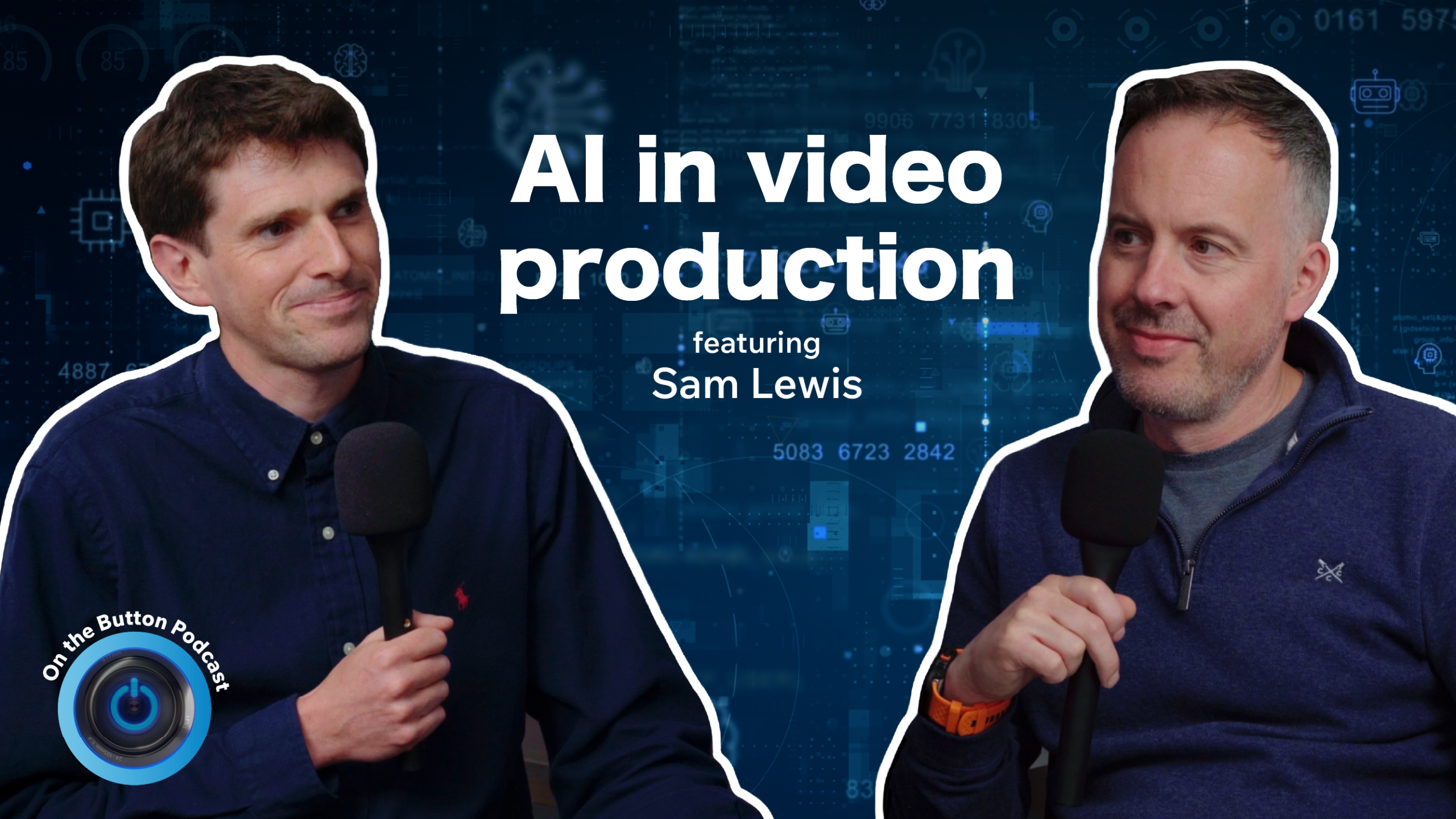
That’s the subject of the new episode of our On the Button podcast, where Simon Crofts sits down with Big Button Production Director Sam Lewis to discuss how AI is already being used in video production and where it could take us next.
Their conversation covers a lot of ground, from how AI is already improving production to how it could make video more affordable and accessible. It also gets into some of the harder questions around accuracy, production standards, authenticity, data protection and creativity.
Here are some of the key themes they explore.
Small applications can make a big difference
Some of the most useful applications of AI in video production are relatively simple. On one project, a contributor referred to a cyclone as a hurricane. The mistake wasn’t picked up until after filming and, with permission from the client and contributor, we used AI to correct what they had said.
On another project, we needed to include an old black and white photograph that was small and damaged. AI allowed us to restore and upscale it so it could be used in the finished film.
Examples like these show how AI can give production teams more ways to solve problems and improve existing material.
AI could widen the role of video
Sam gives the example of a finance client that produces large internal reports and had considered presenting some of that information through video. The cost involved had made it difficult to justify. AI avatars could make video a more affordable option for content like this, giving organisations another way to present information that might otherwise remain in a lengthy document.
That doesn’t make AI-generated video the right answer for every piece of content. It does mean the range of situations where video becomes practical could grow.
But this question must always be asked: is AI-generated video the right choice when authenticity really matters?
Speed doesn’t remove the need to check
AI can produce a brief or script in seconds, and the result can look polished and convincing. If nobody properly checks it, errors can move straight into the next stage of the process.
Sam describes this as “cognitive surrender”: handing work to AI and accepting the output without applying the same scrutiny they would to something produced by a colleague, writer or agency.
A poor brief can lead to a poor proposal, wasted time and work that doesn’t address what the client needs. Proofing, fact-checking and critical judgement still belong in the process.
The ability to fix something doesn’t mean you should
As AI becomes more capable in post-production, it becomes easier to assume that problems can simply be fixed later. Our approach is still to get the best material possible during production and use AI carefully when something genuinely needs correcting or improving.
There is also a point where correction becomes alteration. If AI changes someone’s speech, appearance or performance, the finished video may no longer be an authentic representation of the person who was filmed.
That can undermine credibility, particularly when the content’s purpose relies on trust, making permission and judgement especially important.
Know what happens to your data
The choice of AI tool matters too. Sam highlights the importance of understanding how platforms handle personal, confidential or sensitive information, including their terms, data-processing arrangements and third-party integrations.
For organisations working with an agency, AI use is worth addressing from the outset. Be clear about where you are comfortable with it being used and ask which tools are involved and how data and permissions are being handled. Many organisations are now also including terms around the use of AI in their contracts with suppliers.
Better execution doesn’t guarantee better ideas
AI will continue to improve at executing creative work. Simon’s concern is that if everyone relies on the same tools and asks similar questions, more content could start to look the same.
Sam offers a useful analogy from Radiohead. Thom Yorke once advised guitarist Ed O’Brien to become a good librarian because creative people generate lots of ideas and need a way to organise, revisit and develop them. AI could be useful in that role, helping creatives manage the work around their ideas and giving them more room to develop them.
Watch it on YouTube, or listen on Spotify, Apple Podcasts or wherever you get your podcasts.
YouTube: https://youtu.be/kvFIWy9jjEw?si=ODNAdIkMsbSlhdbH
Spotify: https://open.spotify.com/episode/5y3NwBWaHF583YOy1w1sH6?si=0bc3236561d54793
Apple: https://podcasts.apple.com/gb/podcast/ai-in-video-production-sam-lewis/id1550568060?i=1000785572671
If the episode raises questions about how AI fits into your own video workflow, or you have a different take on anything Simon and Sam discuss, we’d be interested to hear from you. And if you’re working through some of these questions yourself, we’re always happy to share what we’ve learned.